Educator sexual misconduct should be treated like any other emergency a school might face. The federal government, the state government under which a school operates, and various professional organizations provide the sources of the standard of care applicable to this topic. What does this standard of care look like in practice? The Guide to Preparing High-Quality School Operations Plans provides a five-part continuum for school emergency planning: Prevention, Protection, Mitigation, Response, and Recovery.
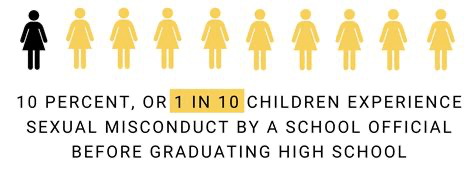
From the Guide, “Prevention, for the purposes of this guide, means the capabilities necessary to avoid, deter, or stop an imminent crime or threatened or actual mass casualty incident. Prevention is the action schools take to prevent a threatened or actual incident from occurring,” (Guide, p. 2). For schools, the most important thing they can do to prevent educator sexual misconduct is to keep bad educators from getting into their schools in the first place. This requires a comprehensive array of school board policies and administrative guidelines, mandated reporting policies and procedures, information from the Child Abuse Prevention and Treatment Act (CAPTA), Title IX of the Education Amendment Act of 1872, and guidance on dealing with false accusations.
This process should be a team process. The planning team should include the Title IX Coordinator, school administrators, an HR team member, and the school district attorney. There may be other stakeholders in the process, but the aforementioned members are critical to developing plans compliant with the established standard of care.
Creating Policies and Administrative Guidelines
The first line of defense against educator sexual misconduct is proper policies and administrative guidelines (CDC, 21). Having clear policies and definitions for the terms used can shape a district’s success or failure. Buy-in from stakeholders at all levels helps to ensure compliance. The Centers for Disease Control and Prevention (CDC) says that this process can be part of the district’s existing risk management process. The CDC recommends that the planning team develop its policies and administrative guidelines based on the following:
- Develop the policy. For example, gather a group of stakeholders, such as caregivers, employees/volunteers, and attorneys, to do the work.
- Approve the policy, which includes making sure it complies with organizational policies, state and national laws, and child protective services and law enforcement.
- Adopt the policy.
- Develop a system to track allegations of child sexual abuse and outcomes of cases.
- Inform your organization about the policy.
- Implement the policy.
- Evaluate the policy to continuously measure whether goals are being met. For example, the goal of setting criteria for screening and selection of employees/volunteers may be to make sure that employees/volunteers are appropriate for working with the youth within your organization.
- Once that goal is agreed upon and the screening and selection policies are adopted, your organization needs to reassess on a regular basis if that goal is being met. If it is not, what needs to be changed to meet the goal? If it is, consider more efficient ways to meet the goal. (CDC, pp. 33-34)

The Readiness and Emergency Management for Schools (REMS) Technical Assistance Center published A Training Guide for Administrators and Educators on Addressing Adult Sexual Misconduct in the School Setting to provide guidance for school administrators on addressing educator (adult) sexual misconduct.
The REMS Guide instructs school leaders on creating policies for staff interactions with students, policies for “gray areas.” Some of these areas include: Traveling with students/transportation issues, after-school guidelines, attention that may cross boundaries, social media boundaries, interactions with students who are 18 and young teachers who are recent college graduates, and circumstances that require staff to have close physical contact with students (REMS, pp. 13-14).
Codes of Conduct
The planning team should consider creating a Code of Conduct for employees and volunteers. In 2014, the GAO found that 42 states used professional standards or codes of conduct to help regulate the professional behaviors of school employees and volunteers (REMS, p. 16). Of those 42 states, 15 included language addressing grooming. 22 states provided examples to describe the appropriate relationship between school employees and students, including the use of technology (GAO, 2014).
The codes should contain clear statements that identify acceptable or unacceptable behaviors, and they should also explicitly prohibit romantic or sexual relationships between school employees/volunteers and students, regardless of the age of the student.
Policies and Procedures for Mandated Reporting
Mandated reporters are personnel required by state law to report suspected or actual abuse. Depending on the state laws, the report may be made to a child protection agency, local law enforcement, or a designated school official. Some districts have policies mandating reporting for instances that happen online, such as sextortion or human trafficking (REMS, p. 17).
The school district attorney will be very helpful here in ensuring that any policies created comply with state and federal laws. Policies and administrative guidelines should limit the number of people notified to maintain confidentiality and to limit the number of times the victim has to recount what happened. They should also include state requirements for when the report should be made and the consequences for non-reporting.
The role of the reporter is not to investigate the alleged abuse, but to report the concerning behavior to those responsible for conducting an investigation. Obtaining help from a child advocacy center and asking clarifying questions of the child are acceptable and should be specified in the policy.
Many school employees are unsure of when to make a report. Fidelity testing done by Safe Havens International bears this out. When given an audio recording of a staff member saying inappropriate things to a student and stroking their hair, more often than not, the employee is unsure what to do.
Child Abuse Prevention and Treatment Act
The Child Abuse Prevention and Treatment Act (CAPTA) establishes minimum standards for state mandatory reporting laws related to known or suspected child abuse. However, states define their own requirements for preventing, reporting, and investigating child abuse and neglect, including sexual abuse. Teachers and school officials are mandated reporters and, while they must have reasonable suspicion that abuse has occurred, they need not have witnessed the alleged abuse directly. CAPTA mandates that state laws offer protection to individuals reporting incidents of suspected child abuse in good faith, even if their suspicions turn out to be unfounded. Thus, CAPTA grants reporters immunity from prosecution (GAO, 2014).
Title IX of the Education Amendments of 1972
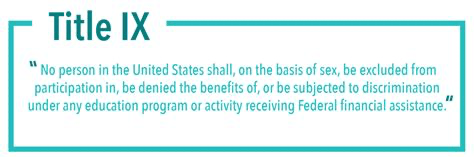
Title IX requires schools to designate a responsible employee who has the authority to take action, has reporting authority, and is otherwise deemed an appropriate school designee (OCR, 2001). The takeaway is that, while schools should not directly investigate an incident of suspected sexual abuse, but report it to the appropriate agency, and once that is done, Title IX does require the school to investigate the incident. This should not interfere with the local agency’s investigation. Since “the standards for pursuing and completing criminal investigations are different from those used for Title IX investigations,” the results of a criminal investigation do not affect a school’s duty to meet its Title IX obligations. Therefore, schools and school districts must separately, in addition to state law requirements, report incidents according to Title IX guidelines (OCR, 2014).
Title IX Legal Implications
Teachers and administrators who do not report suspected child sexual abuse could be personally liable for damages. A school district can be held liable if it is found that it acted with “deliberate indifference” (Shakeshaft, 2004). While courts have struggled to define when this occurs, it is best for schools to remember that the best practice is to report when there is reasonable suspicion that child sexual abuse has occurred. They are protected by law when they make a good faith report.
False Allegations
Policies should also be created regarding false allegations, how they are investigated, and the available consequences for those who make false accusations. Many staff members fail to report because they fear being wrong. Teach them the protections they have for reporting. It is best to investigate and remove all doubt, rather than to remain silent and allow harm to a child.
The best way to avoid false allegations is to avoid possible compromising situations. The NEA provides some insights for teachers to avoid these:
- Whenever possible, do not be alone with a student, because allegations made when there are no other witnesses hinge on credibility. Authorities often tend to favor the alleged victim in these circumstances.
- Maintain a professional demeanor and distance, which means no flirting, teasing, or joking about sex. Do not socialize with students or treat them as “friends.” Never give gifts, unless they are given to every student, and do not single out any one student for special attention or flattery. Do not ask students about their social lives or comment on personal appearance. Avoid discussing intimate details of your private life. Do not hire students to babysit or allow them to visit your home.
- Avoid physical contact with students. As a general rule, it is best to avoid most forms of physical contact, especially kissing, hair-stroking, tickling, and frontal hugging. Use common sense: A “high five” to acknowledge a job well done is fine; a slap on the bottom is not. Male employees are far more likely to be accused of inappropriate contact with students than female employees.
- Avoid using physical force to enforce discipline. When students are misbehaving or out of control, avoid touching or grabbing them to get their attention. Instead, use verbal commands and other disciplinary methods. If you must use physical force in self-defense or to prevent injury to others, use the minimum force necessary to prevent harm and immediately call for help.
- Never allow a student to obsess over you. While a crush can be flattering, an unfulfilled fantasy can result in a student acting out to gain attention or retaliating for being ignored.
If a student expresses a love interest, respond with an unambiguous “no.” Don’t equivocate or encourage the student by acting pleased by the attention. It is advisable to share this information with another adult. - Be particularly wary of “troubled” students. A teacher’s efforts to help can be misconstrued as something more and may lead to an infatuation or dependence. In addition, you don’t have the skills or training needed to assist. Refer the student to the school counselor.
- Be especially vigilant if you hold certain teaching positions. Anecdotal evidence suggests that employees who perform certain jobs are at increased risk of false allegations. These include coaches and performing arts teachers—drama, band, chorus, and debate, as well as publication advisers. This may be the product of the intense nature of such activities, which can weaken teacher/student boundaries, coupled with substantial after-school, weekend, and off-campus contact.
(Simpson, 2006)
Conclusion
This is just an overview of the standard of care for establishing policies and administrative guidelines to address educator sexual misconduct. It can be rather daunting, which is why a planning team is necessary. Having the right people to assist you makes the process less daunting and better equipped to establish clear, concise policies and administrative guidelines. The CDC and the REMS Training Center have provided guidance to assist your team in this process. A list of resources is being provided below to help you as well.
You’ve read about developing a comprehensive array of policies and administrative guidelines, mandated reporting policies and procedures, using information from the Child Abuse Prevention and Treatment Act (CAPTA), and Title IX of the Education Amendment Act of 1872. You were also given guidance on dealing with false accusations. Use the resources provided below. Seek out other guidance, and don’t forget to have your district’s attorney and insurance representative review everything to make sure your efforts are in line with federal, state, and insurance guidelines.
The goal is to provide a safe, welcoming environment for everyone. This is done by establishing clear boundaries and a straightforward approach to handling issues that may arise. Clear boundaries help identify when someone is acting poorly. Having a clear process for dealing with violations is good for everyone, except the educator engaged in sexual misconduct.
This is the goal. The work is worth the effort.
Resources
A Training Guide for Administrators and Educators on Addressing Adult Sexual Misconduct in the School Setting, Washington, D.C., 2017.
https://files.eric.ed.gov/fulltext/ED593742.pdf
The Child Abuse Prevention and Treatment Act (CAPTA) with amendments made by sec. 133 within Title I of the Trafficking Victims Prevention and Protection Reauthorization Act of 2022, P.L. 117-348, enacted January 5, 2023.
https://www.govinfo.gov/content/pkg/COMPS-805/pdf/COMPS-805.pdf
Educator sexual misconduct: A synthesis of existing literature. Washington, DC: U.S. Department of Education, Office of the Under Secretary, Policy and Program Studies Service.
https://www.ed.gov/research/educator-sexual-misconduct-a-synthesis-of-existing-literature
Government Accountability Office. (2014). Federal agencies can better support state efforts to prevent and respond to sexual abuse by school personnel. Retrieved from
http://www.gao.gov/assets/670/660375.pdf
Office for Civil Rights. (2001). Revised sexual harassment guidance: Harassment of students by school employees, other students, or third parties. U.S. Department of Education. Retrieved from http://www2.ed.gov/about/offices/list/ocr/docs/shguide.pdf
Office for Civil Rights. (2014). Questions and answers on Title IX and sexual violence. U.S. Department of Education. Retrieved from
http://www2.ed.gov/about/offices/list/ocr/docs/qa-201404-title-ix.pdf
Saul J, Audage NC. Preventing Child Sexual Abuse Within Youth-serving Organizations: Getting Started on Policies and Procedures. Atlanta (GA): Centers for Disease Control and Prevention, National Center for Injury Prevention and Control; 2007.
https://www.cdc.gov/child-abuse-neglect/communication-resources/PreventingChildSexualAbuse-a.pdf
Shakeshaft, C. (2004b). Educator sexual misconduct: A synthesis of existing literature. Washington, DC: U.S. Department of Education, Office of the Under Secretary, Policy and Program Studies Service.
https://www.ed.gov/research/educator-sexual-misconduct-a-synthesis-of-existing-literature
Simpson, M. D. (2006). Teach but don’t touch. Washington, DC: National Education Association. Retrieved from
https://www.kea.org/uploads/files/Legal/TeachButDontTouch.pdf
U.S. Department of Education, Office of Elementary and Secondary Education, Office of Safe and Healthy Students, Guide for Developing High-Quality School Emergency Operations Plans, Washington, DC, 2013.
https://www.ed.gov/media/document/rems-guide-developing-high-quality-emergency-operations-plans-k-12-schools-2013-113150.pdf


Leave a comment