The public information officer (PIO) will ensure your campus provides accurate and appropriate information to the press during and after the incident while keeping journalists, the community, and first responders safe.
By Stephen Satterly, Campus Safety Magazine, March 26, 2014
On January 21, a man walked into the Electrical Engineering (EE) building at Purdue University. He located Andrew Boldt, age 21, stabbed him and shot him at least four times, killing him. He then went outside, put his bloody hands behind his head, and waited for the police to arrest him. He is currently in the West Lafayette jail and has been charged with murder.
The effect on the Purdue campus was almost immediate. The EE building was placed on lockdown, and a tweet was sent to everyone on campus directing them to do the same.
“Shooting reported on campus. Bldg Electrical Engineering; Avoid area; Shelter in place. Check http://www.purdue.edu for updates 12:19 PM – 21 Jan 2014”
The university used social media to let everyone know the situation had been resolved.
“Everyone in EE Bldg continue to shelter in place! All other areas of campus may resume normal op. Check http://Purdue.edu for updates. 1:38 PM – 21 Jan 2014”
The response of the Purdue emergency management officials was excellent, and their first responders are top-notch. Purdue officials communicated frequently with students and staff during this emergency, indicating they had a public information officer (PIO) on duty.
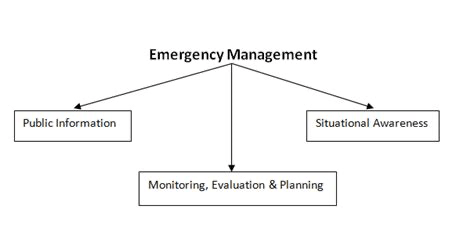
A PIO is a person from an organization whose primary purpose during a crisis is to create a flow of information from the organization to the media. This article is intended to help school safety and campus emergency management agency officials review and strengthen their PIO procedures for the time when they will be needed.
PIOs Work in 2 Worlds: Incident Command and Journalism
An effective PIO can work in emergency management and manage the media. This requires, at a minimum, the information on emergency management found in the Emergency Management Institute courses IS-100, IS-200, IS-700, and IS-800. IS-100 and IS-200 introduce the Incident Command System (ICS), the core of emergency management, while IS-700 and IS-800 introduce the National Incident Management System (NIMS). IS-29: Public Information Officer Awareness is an Emergency Management Institute course that introduces the PIO position.
In ICS, the PIO is part of the command staff, along with the liaison officer and the safety officer. These three positions assist the incident commander with managing an incident. They do this so that the incident commander can focus on managing the incident. Specifically, the PIO is the conduit for information from the incident commander to internal and external stakeholders, including the media. Any person assigned to this position should be trained up as much as possible.
As soon as possible after the shooting occurred, the Purdue PIO would have arrived on site and contacted the incident commander. This would have been done before any comments were made to the media. With the incident commander, the PIO would have assessed the situation and would have devised a media plan.
To assist a PIO in doing this, the Emergency Management Institute recommends asking the following questions of the incident commander:
- What is the current situation?
- What are the incident objectives?
- What actions and resources are being used to achieve the objectives?
- Are there any warnings or other critical messages to communicate to the public?
- Is there any restriction on the information to be released?
- Have the media arrived at the scene?
- Are there any other instructions?
Under NIMS, the PIO acts as a liaison with the public and media and provides other agencies with incident-related information. They gather, verify, coordinate, and provide accurate, accessible, and timely information on the incident’s cause, scope, current situation, committed resources, and other matters of general interest to both internal and external audiences. The PIO may also monitor public information, such as media reports.
Follow Through Goes a Long Way
Managing public information is another fundamental element of emergency management. According to the Emergency Management Institute, the PIO is responsible for:
- Determining the information to be communicated to the public
- Creating clear and easily understood messages
- Ensuring information is accurate
- Identifying how messages should be conveyed
- Coordinating information being distributed to ensure consistency with other agencies’ messages
At an incident, the PIO can begin to manage the situation by contacting the media. When an incident occurs, the media will be there, whether they’ve been invited or not. The PIO cannot manage who shows up, but they can and should manage contact with the site. The Emergency Management Institute suggests telling the media representatives:
- Who you are
- How can they contact you
- That you will get that information and be back to brief them, and then do so.
Once the PIO says something to the media, they should follow through. It goes a long way to establishing good relations with the news media. If the media thinks you cannot be trusted, they will often act unilaterally to get the information their viewers want.
A new issue is the advent of smartphones with cameras, which turn everyday people into amateur journalists. The PIO should treat them just as they would a true journalist, with courtesy and respect. Getting them involved in the formal process may make them consider more information before blogging about the incident, or using Pinterest or Tumblr to post raw photos.
Anticipate the Media’s Needs, Establish a Press Area
In any incident, the news media will want access to information and images. The PIO should anticipate what they would want, giving them a better chance to manage the scene and help guide the story.
Establishing a media area can facilitate the enhanced flow of information between the PIO and the media. The Emergency Management Institute has provided the following questions to aid the PIO in establishing the media area:
- Does the media area infringe on the scene? Safety is always a primary concern, including the media’s. Also, if the scene of the incident is a crime scene, it will be very important to prevent the media from contaminating it.
- Does the news media presence interfere with the work being done (e.g., rescue, cleanup, etc.)? A major part of managing the media is compromise. If the media can get close enough to get a good shot, they will be less likely to sneak in to get one. Know what the media wants and needs. As much as you can, give it to them, or they may try to get it for themselves.
- Does the location of the media area place the media representatives in danger, or will they be able to endanger others? Reporters are goal-oriented. They are paid to “get the story.” It is your job to keep them and the public safe. Communication is key. Explain not only the dangers they may face, but also the dangers they may pose to first responders if they must be saved.
- Is the media area convenient for you and policymakers? Wherever possible, arrange a media area that allows face-to-face communication.
- Will the reporters be too close – will they have access to sensitive/protected information? Modern technology makes it easy for reporters to listen in or digitally capture sensitive information. Make sure the media area is not in line of sight of the Incident Command Post.
- Will the media area give reporters a clear line of sight to satellite or microwave towers? Reporters need these to communicate with their producers. Check with them to make sure the media area is suitable for this purpose.
- Can the media get the images they want? If the media cannot get close enough to get pictures, investigate establishing a media pool in which the various media share resources, or provide them with professional-quality pictures and videos. At a minimum, have hi-res pictures of each of your schools and each of your school administrators on hand.
- Are there “convenience” facilities available for media (restrooms, food, electrical outlets, etc.)? This is not your responsibility, but it can go a long way toward positively influencing the media. Treat them well, and they will be more inclined to treat you well.
- How can you keep them in the media area? Do not try. They have other places to get interviews and background information, etc. Regularly scheduled press conferences can entice them from roaming too far afield.
Stephen Satterly, II, is a senior analyst with Safe Havens International. He is also a researcher and author. He can be reached at stephencsatterly2@gmail.com.
 Stephen C. Satterly, II - Author
Leave a comment