Understanding the tactics used by adult manipulators and the behaviors of at-risk youth will help you identify problems before they escalate into emergencies.
By Stephen Satterly, Campus Safety Magazine, October 30, 2013
Most incidents of violence share a common element: the attacker didn’t just “snap.” Usually, they show signs of increasing tension that lead up to the act. This tension develops gradually and can serve as a warning sign to alert potential victims. Recognizing these signs is the first step in protecting yourself from those who want to harm you.
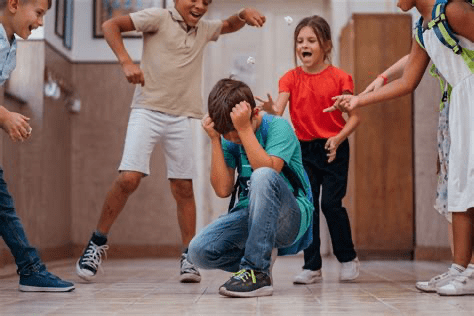
The continuum has three levels. Level 1 is intimidation, Level 2 is escalation, and Level 3 is further escalation (Holmes and Holmes, 2001). The continuum of violence is not smooth or consistent. A person can sometimes display signs at different levels of the continuum simultaneously. What you are looking for is a change in their normal behavior, with a “cluster” of actions that occur close together, especially after a “trigger” or emotional event.
Know the Tactics of Manipulation
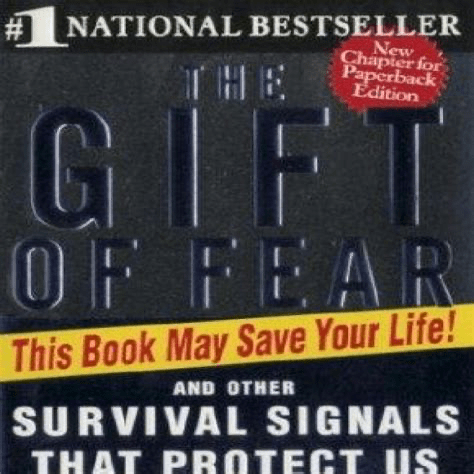
Gavin de Becker’s No. 1 bestseller, The Gift of Fear, teaches readers that manipulators often give off signals that we pick up as feelings. We frequently discount these feelings for various reasons, leaving us open to manipulations that get us to let down our guard. De Becker describes seven signs that a person is trying to manipulate you.
- Forced teaming: A manipulator gets the intended victim to share a common purpose that doesn’t exist.
- Charm and niceness: These traits are abilities used to gain something for the manipulator.
- Too many details: This technique is used by liars to cover up their lies.
- Typecasting: The manipulator slightly challenges the victim, who then tries to prove the manipulator wrong.
- Loan sharking: The manipulator will do something for the victim and then pressure them to do something in return.
- The unsolicited promise: This creates a quid pro quo in which the victim feels a sense of debt for something the manipulator has done.
- Discounting the word “no”: A manipulator who cares little for your wishes will not take “no” for an answer.
A manipulator is, at best, uncomfortable to be around and, at worst, a danger to your well-being. Identify these signs in your everyday interaction with others. Knowing they are being used against you will cause them to lose power over you, and you will learn to trust your feelings about people.
Children provide a challenge in this area. They have instinctive manipulation skills but lack the polished tactics of adult manipulators. Their brains are not fully developed, so psychological signs are not as reliable. However, there are behavioral signs that can provide you with early warning signs or signs that violence is imminent:
- Social withdrawal: This is of more concern when it is out of character for the student.
- Excessive feelings of isolation: The student begins to feel significantly isolated from others due to real or perceived actions by others.
- Excessive feelings of rejection: The rejection may be real or perceived.
- Feeling of being picked on/persecuted by others.
- The student has been the victim of a violent incident or more than one incident.
- The student has little interest in school and is doing poorly academically.
- The student expresses violence in an unhealthy or unusual manner, especially when doing so includes school projects.
- Uncontrolled anger.
- Intolerance for differences and prejudice: Students who are intolerant of differences and/or hold strong prejudices may be at heightened risk.
- Patterns of impulsive and chronic hitting: An easily detected early warning sign is impulsive, regular hitting of other students or even adults.
- Students who regularly use intimidation and bullying behaviors are at a higher risk.
- Students who have been repeatedly disciplined for failing to follow school policies may be at greater risk.
- Students who have exhibited violent and aggressive behavior towards other students, siblings, and adults may also need assistance before the problem escalates into even more severe behaviors.
- Using alcohol, tobacco, and other drugs increases risks for children and youth. Their use increases the risk of poor decision-making and judgment, and puts a user at greater risk of trouble or injury.
- Affiliation with gangs: A very dangerous behavior and clear early warning sign is participation in gang activity.
- Inappropriate access to, possession of, and use of firearms and other weapons: This must be addressed immediately.
- Threats of violence (Dorn & Dorn, 2008): Making verbal, written, and sometimes even gestures implying impending violence are early warning signs of particular concern, especially when accompanied by other behaviors.
The warning signs in children that indicate violence is about to happen include serious and aggressive fighting with peers and family; extreme destruction of property; intense rage over seemingly minor issues; detailed threats of lethal violence; possession or use of firearms and weapons; and self-harming behaviors or threats and attempts at suicide (Dorn & Dorn, 2008).
Learn to Trust Your Instincts
The continuum of violence helps us gauge the severity of psychological signs of violence. These signs can appear in your place of worship, your family, or even on the street. Trust your instincts. If someone’s behavior makes you feel uneasy, there is usually a reason for it.
The seven survival signals from de Becker can help you know when a stranger is manipulating you. Practice identifying these techniques and learn to trust your feelings. When youth are involved, the goal of identifying warning signs in a student is to get them help, not to exclude them from the rest of the student body.
Learn the signs and know what to do if you notice them. Knowing what to do will make it more likely that you will act when someone is on the continuum of violence.
Ask yourself: if you were a campus official, what would you do if a co-worker showed these signs? A student? How would you feel if you had this knowledge and said nothing, and your co-worker committed an act of violence? When it comes to this type of behavior, these signs can indicate a life-and-death situation in the making.
Stephen Satterly, II, is a senior analyst with Safe Havens International. He is also a researcher and author. He can be reached at stephencsatterly2@gmail.com.
 Stephen C. Satterly, II - Author
Leave a comment