By Stephen C. Satterly, School Planning & Management Magazine, July 1, 2012
“Now, the reason the enlightened prince and the wise general conquer the enemy, whenever they move, and their achievements surpass those of ordinary men, is foreknowledge.” Sun Tzu
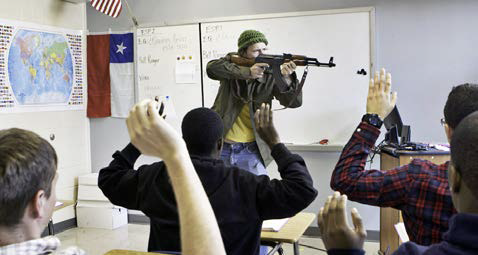
One day at your school, you hear a pop. Out of place, it attracts your attention. You start to dismiss it when you hear some cries and more pops.
Quick, lives could be at stake!
Do you go investigate or head towards safety?
Think, THINK!
There’s more popping, and then, panicked screaming.
What do you do?
Most people are not prepared for this moment. They weren’t trained for it. Education is not supposed to be about violence. Yet, in today’s world, violence in schools exists.
Schools need to prepare for the unexpected, just as the military and civilian first responders do. They plan and train for worst-case scenarios. Those tasked with keeping schools safe must do the same. While the above example may be rare, it is important to understand that schools must be prepared for a wide range of rare yet potentially deadly events.
There are a variety of situations in schools that require instant decision-making. The steps the military uses to prepare for combat are similar to those used to prepare for school emergencies. In a crisis, chaos reigns, making Sun Tzu’s statement above relevant; foreknowledge can make the difference.
Successful school safety preparedness means looking ahead at what could happen and figuring out how to deal with it. That’s how foreknowledge is gained. While some people live in denial of the dangers schools face, those whose duty is to protect our school children have the responsibility to recognize threats and properly prepare. Developing the ability to deal with a crisis is first a matter of commitment, and then one of learning. More to the point for schools, this ability can be learned. This learning can occur at little expense to the school, but it does require a commitment by the community.
Response Time
You must know an incident is occurring before responding. Will you use an evacuation, shelter-in-place, or a lockdown? What is a mental health incident? Recognizing what is happening allows you to initiate the appropriate response protocol, which includes activation of the Incident Command System. This gets the right people responding.
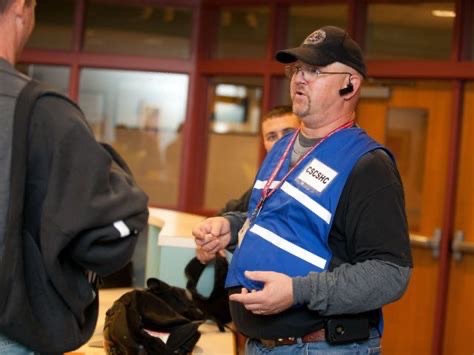
Once you have identified the incident, you can apply the appropriate response. The first step in any response is to secure yourself, then others. Only when you are secure should you alert others. This begs the question, “Why not alert others first?” The answer is a concept foreign to most, and is simply called “permission to live,“ a concept developed and taught by Michael Dorn of Safe Havens International.

Any school that teaches its people to wait for permission before implementing safety protocols not only endangers its people but may also expose itself to criminal and/or civil liability. Permission to live means that anyone may initiate emergency responses, not just school leadership. If a student sees smoke, he/she should be able to pull a fire alarm, then tell someone what he/she saw. If a teacher sees a suspicious person entering the building, he/she should initiate a lockdown and then notify the front office.
The appropriate response to a school incident consists of one of three things:
some type of evacuation, some type of shelter-in-place, or some type of lockdown. The various responses should be written down and practiced as functional protocols. After alerting others, the decision is to flee, shelter, or hide. This is where the school officials earn their keep, as the wrong decision can lead to more problems. This decision must happen immediately. Hesitation can cost lives.
Once you have identified the type of response you will use, implement it and then contact your chain of command to let them know what is happening. They will have their own protocols to follow, and they will need to know what is happening. Gather as much information as you can to brief the first responders when they arrive, but make sure your children are safe first.
Mental Simulation
People who make these decisions aren’t born with that capability; they can be trained using methods researched by the military, firefighters, and other agencies that require fast decision-making under stress. Dr. Gary Klein, in Sources of Power, refers to this as “pattern matching and recognition.” Schools need good, solid protocols, but without knowing which protocols to implement, the best protocols in the world will be worthless. The best way to learn which protocols to implement is mental simulation. Have the staff member, student, or administrator imagine themselves in a situation and think about how they would respond.
Over time, these short mental simulations will build a base of experience that the person can rely on to make the right call. According to Dorn, “The research indicates clearly that mental simulation of a wide range of crisis situations can dramatically help people improve how well they perform under life and death stress. The good news is that effective mental simulation is much easier than many other effective preparedness methodologies, such as full-scale exercises.” This gives schools a cost-effective means of creating safer schools. It’s not programs, it’s not the equipment; it’s the people who stand in harm’s way at the decision point who will make the difference. Will you give them the chance to make that difference, or just hope your plans will work?
Without the right people, the plans are just paper.
Stephen Satterly, II, is a senior analyst with Safe Havens International. He is also a researcher and author. He can be reached at stephencsatterly2@gmail.com.
 Stephen C. Satterly, II - Author
Leave a comment