By Stephen C. Satterly , Campus Safety Magazine, 07/01/13
Educators have numerous opportunities to make decisions during their day; a lesson is bombing, a child on the school bus has forgotten their lunch, a teacher has gotten sick, and you need to find a way to cover their classes. The means used to make such decisions are very different from those made under stress. Consider stressful situations like a child stabbing another in the classroom, a school bus that has just been t-boned by a car, or an angry parent who pulls a knife in the school office.
Stressful situations present the decision maker with physiological, psychological, and emotional challenges that can impede proper choices. There are ways for educators to learn to overcome these challenges, ways that have been researched and proven successful.
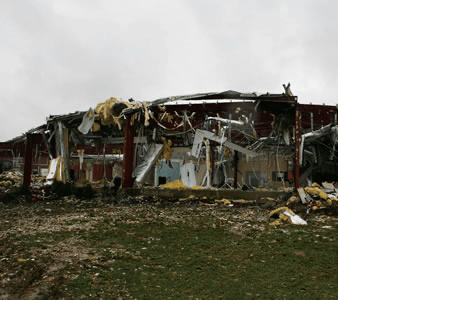
Imagine that you are a school administrator in a midwestern school, and your area is under a tornado watch. The radar shows a storm cell moving right toward your area, and it has a history of producing tornadoes. You now face a dilemma experienced by other school administrators in Enterprise, AL; Henryville, IN; and Moore, OK. Do you shelter-in-place, or do you send your children home?
The office feels hot, your vision seems a bit fuzzy, with speckles floating around, your fingers tingle, and, horror of horrors, your gut rumbles, and you have a sudden urge to go to the restroom. With all this, and the questions being asked of office personnel, teachers, and parents, how do you handle the numerous stimuli to make the right call?
If you wait until this moment to make the call, you have waited too long. A decision as momentous as this is one best made when the weather is clear, and you are not experiencing anxiety. This requires two things: preparation and an understanding of how you make decisions under stress.
PREPAREDNESS
Preparedness comes in the form of protocols, written plans of action. These are developed over time, based on risk assessments, stakeholder-driven planning, and exercises — all aligned with the U.S. Department of Education model. Therefore, when a crisis occurs, they are there to provide guidance and direction.
Ignoring your established protocols can open you up to civil and possibly even criminal liability. During a crisis, it is easy to become caught up in the moment, and panic can set in. That is why protocols exist. They give you something to follow to prevent panicked, stressed, emotional minds from making bad decisions.
No amount of planning can prepare for every eventuality, but that is no reason to ignore them. Engage in proper planning, and trust in your finished product to get you through the crisis.
STRESS
In his book On Combat, LTC Dave Grossman describes the physiological changes the body undergoes under stress. The sympathetic nervous system (SNS) creates a “fight or flight” response. As Grossman writes, “the SNS is generally concerned with the expenditure of energy from reserves that are stored in your body, inhibiting digestion, increasing secretion of epinephrine and norepinephrine, dilating the bronchial tubes in the lungs, dilating heart vessels and tensing muscles.”
This can lead to loss of control of the bladder and bowel function, ‘tunnel vision’, loss of manual dexterity, and lowered cognitive function. It is the last effect that concerns this article. The lowering of cognitive function impairs the ability to make decisions. It is for this reason that protocols are made, and if properly made, are to be trusted.
However, protocols will not help you overcome the physiological changes your body goes through. This requires “stress inoculation” and tactical breathing.
STRESS INOCULATION
Stress inoculation is a concept in which a person is taught to deal with stress by undergoing training that simulates the event they are preparing for. Thus, slowly walking to shelter areas and setting up your Incident Command Post will not prepare you for the stress of doing it when a tornado is bearing down on you.
For schools to utilize stress inoculation, they must incorporate time stress and the stress of multiple-step missions to inoculate their staff against the stress of a crisis. Time stress involves using a watch to time the attainment of a goal, then attempting to do it faster in subsequent attempts. This makes the staff focus on the action steps in your protocols, which will better prepare them than just walking or talking through them.
The use of multiple steps teaches the mind to think beyond the here and now and plan. The steps must be realistic. Let’s use the tornado drill as an illustration. The existence of a tornado is usually made known to us either visually or by a siren. Your exercises should begin the same way. It may be because a staff member saw one, some staff heard the warning siren, or perhaps via a weather radio. In any event, start the exercise realistically.
Once the staff and students are in their shelter areas, the staff should make sure all students have adopted their established “safe position,” either sitting or kneeling. The next step is accountability. If the tornado hits the school, first responders will need to know if everyone has gotten out, so have the teachers visually and/or audibly account for everyone.
The next step is evacuation. If your building is hit by a tornado, it will not be safe to stay in afterwards. Have teachers plan multiple escape routes, as one or more may be blocked by rubble. By adding multiple steps to the protocols’ practice, you are inoculating your staff against the stress of actually doing it later.
TACTICAL BREATHING
Tactical breathing is a method to bring your heart rate down. This will reverse the effects of an elevated heart rate and will allow you to think and act decisively. On Combat contains a detailed description of how this works and why.
Breathe in through your nose for a count of four, letting your belly inflate. Hold for a count of four, and then release your breath through your lips for a count of four, letting your belly collapse. Hold for a count of four, then repeat as needed. As with any other physical skill, the more you practice, the better you will get at it. Soon, all you will need to do is take a deep breath and release it to get the calming effect.
CONCLUSION
Stressful situations present the decision-maker with physiological, psychological, and emotional challenges that can impede proper choices. The means used to make such decisions are very different from those used during calmer times. Develop your protocols to guide you through a crisis. Develop ways to inoculate your staff against stress and teach them the skill of tactical breathing to keep their heart rates closer to normal.
They are looking to you to lead them in a crisis. Give them the skills they need, and they will make your job easier.
Stephen Satterly, II, is a senior analyst with Safe Havens International. He is also a researcher and author. He can be reached at stephencsatterly2@gmail.com.
 Stephen C. Satterly, II - Author
Leave a comment