By Stephen Satterly, II, School Safety Monthly, May 2017
Tornadoes are low-probability, high-impact events. In 2002, my elementary school narrowly missed a direct hit (by approximately 25 yards) by an EF3 tornado that devastated the neighborhood. In 2012, Henryville (IN) Elementary School and High School were nearly destroyed by an EF4 tornado. A tornado bearing down on a school is a nightmare for school administrators throughout this country.
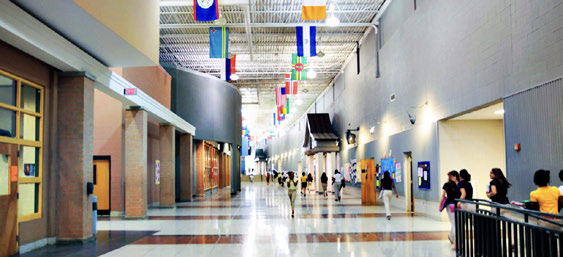
While many schools have traditionally used hallways for storm sheltering, some hallways are not suitable due to large roof spans or exterior doors and windows. In other cases, a hallway may be the safest part of the school. A systematic process can simplify and improve your planning for severe weather.
Determining the areas to shelter students to meet the standard of care established by the Federal Emergency Management Agency (FEMA) during a high-wind emergency requires the participation of architects, engineers, and first responders. Why do school officials need to spend precious staff time and, in some cases, money on laborious school safety efforts when schools can simply put students in the hallways and have everyone assume the “duck and cover” position?
The short answer is that the lives of students and staff may depend on it. The long answer concerns the importance of meeting the standard of care in the event of injury or death during a severe weather event.
On May 22, 2011, an EF5 tornado struck Joplin, MO, causing massive devastation, including the destruction of Joplin High School and major damage to East Middle School. Footage from the high school CCTV system showed debris being blown along the hallways, prompting the superintendent of Joplin Schools to announce, “Joplin Schools no longer utilize hallways – period.”
My intent is not to malign or impugn anyone involved in the Joplin tornado of 2011. The hallway footage was terrifying, and one can understand why they chose not to use the hallways for protection in the future. Part of this choice was the need to rebuild. The new buildings included shelters built to FEMA specifications – a choice not normally available to many existing schools.
The takeaway is that each school’s unique design should be considered when determining where the best available shelter is. In some cases, hallways are the best available shelter areas for tornadoes because they have no exterior doorways or windows. In this hypothetical example, using another area could result in injury or death. School officials may then be unable to demonstrate that they met the standard of care in litigation. As with other types of crisis events, care should be exercised before making dramatic changes based on any single catastrophic event. While there are times when this type of change may be appropriate, there are cases where this can be a tragic error.
To find the standard of care for tornado sheltering in schools, start with FEMA P-431, Tornado Protection: Selecting Refuge Areas in Buildings, Second Edition/October 2009. Detailed information is included in FEMA’s Best Available Refuge Area Checklist (BARA), which is found in FEMA’s P-361, Safe Rooms for Tornadoes and Hurricanes: Guidance for Community and Residential Safe Rooms.
Another source of the standard of care is an article from the Storm Prediction Center at the National Oceanic and Atmospheric Administration (NOAA). Roger Edwards wrote Tornado Preparedness Tips for School Administrators. In it, he says,
“Ultimately, the school administrators need to evaluate the
time, space, traffic flow and coordination needed to direct
the kids and staff into safe areas in an organized manner.
That will need a customized drill, which will vary from
building to building.”
Tornadoes are terrible, unpredictable occurrences of nature. At the same time, however violent a storm gets, having the right preparation will increase chances of survival for building occupants, and will help defense efforts should litigation follow a severe weather event in spite of your efforts to protect staff and students.
8 Steps to Meet the Standard of Care for Severe Weather Sheltering
1. Determine the maximum number of people needing shelter.
2. Decide where, in your building, the best available shelter is found using the BARA Checklist, available from FEMA here.
3. Decide how to get the people in your building from where they are to the Best Available Refuge Area.
4. Write this process down and assign it as part of your school’s disaster plan.
5. Go over this plan with your local first responders.
6. Practice – and assume that individual staff may need to notify the office and initiate sheltering before a warning is received by the school or district.
7. Plan out what to do during the storm, and after, including how to communicate, triage, and provide first aid, and maintain accountability.
8. Identify the training your people will need to make the plan work, and get it for them.
Stephen Satterly, II, is a senior analyst with Safe Havens International. He is also a researcher and author. He can be reached at stephencsatterly2@gmail.com
 Stephen C. Satterly, II - Author
Leave a comment