By Stephen Satterly, May 1st, 2014 in School Planning and Management Magazine
On May 20, 2013, near the end of another long school day, and just before the children would be lining up to board their buses, stepping out front to meet their parents, or walking home to play, the world changed for the students and staff of Plaza Towers Elementary School in Moore, OK, as nature’s hand interceded.
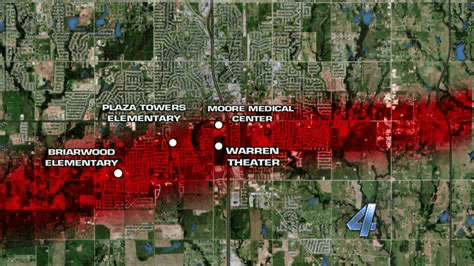
At 2:56 p.m., a tornado touched down in New Castle, just west of Moore, and within 39 minutes it had traveled 17 miles, growing to a massive 1.3-mile-wide EF-5 monster. With winds exceeding 210 miles per hour, this unyielding force of nature turned Plaza Towers Elementary School into a pile of rubble with teachers and students trapped underneath.
Seven students, eight- to nine-years-old, were found dead in one of the classrooms. Initial reports were that they drowned, but the state’s medical examiner’s office found that six students were asphyxiated, and one was killed by blunt-force trauma.
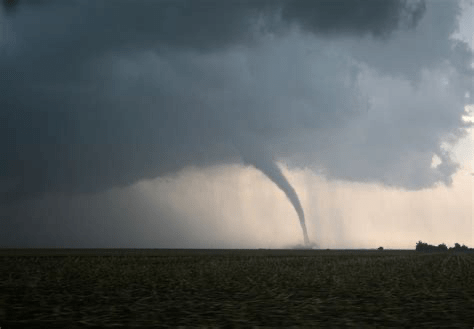
An EF-5 tornado is one of the most devastating natural disasters a school can face, but it is not the only one. Wildfires, mudslides, earthquakes, lightning, hurricanes — there are numerous ways for the Earth to provide a threat to a school. Some schools have found it easy to focus on active shooter incidents. With 62 people killed in 22 K-12 active shooter incidents since 1998, they certainly have a major impact on a community. However, in terms of the number of incidents and the amount of property damage done, Mother Nature takes a back seat to no one.
School administrators and safety professionals would be prudent to assess the risk of natural disasters to their schools and to develop, then practice, plans and protocols to prepare for and respond to them.
Risk Assessment
Risk assessment is a process for identifying potential hazards and analyzing what could happen if they occur. Schools should use this process to identify the natural hazards they may face, identify the vulnerability targets of those hazards, and assess the potential impacts of the losses they could incur.
Hazard Identification
Identifying hazards is a local activity. A hazard for the county may not be a hazard for the school, so school officials need to focus on their school. They should also seek assistance from their local emergency management director and first responders.
Data on hazards can be found at various sources. The National Oceanic and Atmospheric Administration (NOAA) is a good source for hurricane data. The National Weather Service and Storm Prediction Center provide the best data on tornadoes, lightning, and other weather-related phenomena. The National Geologic Survey is an excellent source for earthquake data. Between these sources and the input of local experts, school officials should be able to identify the various hazards their schools may face.
Once a hazard has been identified, it should be analyzed for probability and magnitude. For example, in Indiana, the damage from a hurricane would be of high magnitude but low probability. Thus, it would not be prudent to plan for hurricanes in Indiana. Thunderstorms can cause damage. In Indiana, the probability of them happening is high, especially during warm weather. However, the damage they cause is usually light, with the greatest danger being from lightning. Consequently, few Indiana schools have thunderstorm protocols.
Vulnerability Targets
Vulnerability targets are the people or things that will be harmed by a disaster, with injuries to people as a priority. Physical assets may also be at risk. These include school buildings, infrastructure, and utility systems.
Vulnerabilities include building construction deficiencies and gaps in security and protection systems. They contribute to the severity of damage during a disaster. A building without a fire sprinkler system could burn to the ground, while a building with a properly designed, installed, and maintained fire sprinkler system would suffer limited fire damage.
Impact Analysis
Impact refers to the loss of valued assets. It includes casualties, property damage, loss of business continuity, financial loss, and lawsuits. An impact analysis should include methods to reduce the impact, called mitigation. The fire sprinkler system mentioned above is an example of mitigation.
Plan Development
Plans should be made that mitigate or respond to the identified risks. These plans must take into account the various stakeholders affected by them and should be specific to those stakeholders. Just as plans are school-specific, they should also be stakeholder-specific. The plans should also include any protocols to be used.
Stakeholders
Identifying stakeholders is the first step in the planning stage. Stakeholders have a personal interest in the outcome of a plan. A school’s stakeholders are students, teachers, administrators, staff, parents, the community, and anyone else the school officials determine has an interest in the outcome. Good plans will have components specific to each stakeholder. The plans for teachers should be different from those for administrators, and from the plans for custodians, cafeteria workers, or front office personnel.
Protocols
A protocol is a set of standardized procedures for responding to a specific disaster. Standardized procedures make recall easier under intense stress. They provide a common training base for all stakeholders. They do not cover all possibilities, and like military plans, they will often not survive first contact intact. They do, however, provide you with a starting point, and having a well-planned protocol is much better than no plan at all.
Exercising the Plan
Once the plan is created, it should be practiced. The practice needs to occur regularly, as part of a robust, progressive exercise regimen. Practicing the plan strengthens the stakeholder’s ability to implement the plan. It also identifies flaws in the plan, allowing any deficiencies to be addressed in a relatively low-stress situation prior to their use in a disaster.
Orientation Seminars
An orientation seminar is an overview or introduction to an emergency plan. It allows participants to become familiar with roles, plans, procedures, or equipment. The seminar can also be used to assign responsibilities. Schools will typically have the orientation seminar at the beginning of the year.
Drills
The purpose of a drill is to practice one small part of the emergency plan. It typically does not involve coordination with other stakeholders. The drill should focus on a single, relatively limited portion of the overall emergency plan. Fire drills in schools most often focus on evacuating the school promptly.
Tabletop Exercises
A tabletop exercise is an informal exercise that should occur in a relatively stress-free environment. It is a discussion between participants who examine and resolve problems with their emergency plans. In schools, the tabletop exercise is the bread and butter of emergency planning. The research of Dr. Gary Klein has shown that frequent scenario-based training deepens the knowledge base a person uses to make decisions during a crisis.
Schools can do this at team meetings, staff meetings, central office cabinet meetings, and any other time educators gather together. It takes mere moments to describe a realistic scenario and then ask, “What would we do?” This type of exercise has the added benefit of creating “buy-in” of school staff, increasing the likelihood that the procedures will be used in an actual disaster.
Functional Exercises
A functional exercise is a simulated, interactive exercise that tests a school’s capability to respond to a simulated disaster. Functional exercises test multiple functions of the school’s emergency plan and their coordination with responding agencies.
A school district can use a functional exercise to practice a school’s ability to receive a bomb threat, process it with the local 911 call center, then employ their protocol.
Schools operate under the constant threat of natural disaster. The innocent children in the school pose a critical vulnerability that should motivate any school to create a viable plan and prepare it for implementation.
The two keys to a viable plan are a good risk assessment and a robust exercise program. Identifying local hazards helps schools determine vulnerabilities and the impact of a natural disaster on their vulnerability targets, especially their people. Risk assessment is, therefore, one of the most important safety activities a school can undertake.
Schools must develop a natural disaster plan and then develop a progressive exercise plan to practice their responses. Use realistic, scenario-based tabletop exercises to deepen staff knowledge of emergency response, and coordinate with first responders and the local emergency management agency across all phases of the process.
 Stephen C. Satterly, II - Author
Leave a comment